
Housing communities designed around Filipino families’ needs
Affordable housing remains a challenge through the years, but Kaia Homes, Inc. (KHI) believes socialized housing can meet government requirements while providing the quality and comfort of private communities.
“There are government regulation requirements,” KHI president John Phillip Wang told the Manila Standard Life. “But why stop and just deliver what the government requires? The delivery of the features here is in line with what we deliver in our other subdivisions or other projects. It comes with trying to understand the buyer and trying to focus our efforts around the buyer.”
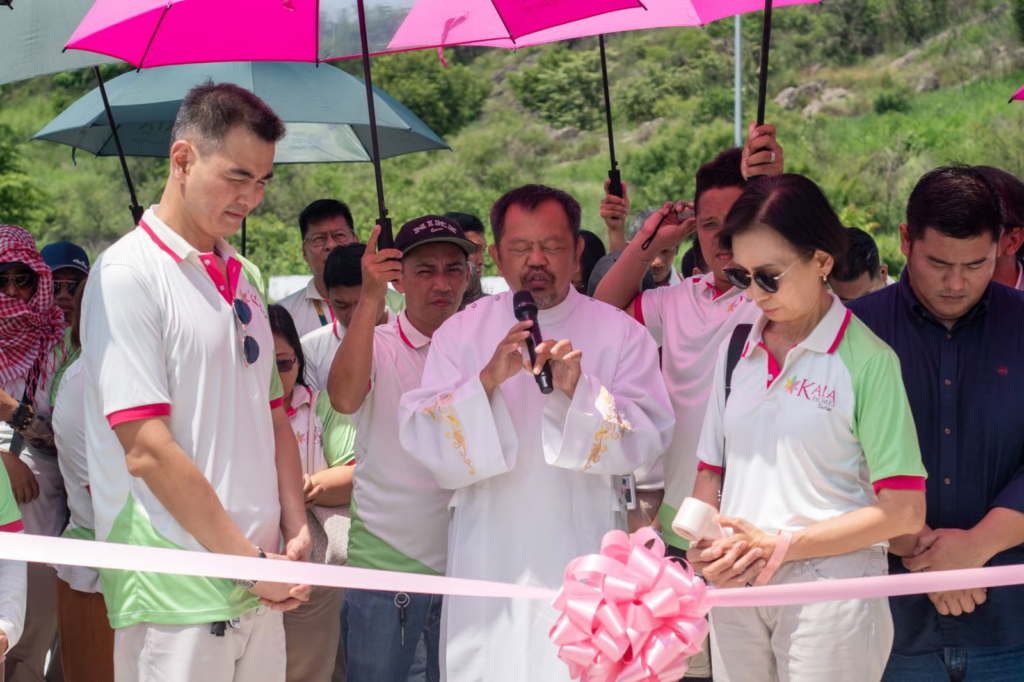
The company recently unveiled Kaia Homes Tarlac, a 48-hectare community in Barangay Armenia, Tarlac City, with 7,066 two-story townhouses designed as an affordable alternative without sacrificing quality, comfort, and dignity.
KHI is an affiliate of Citihomes Builder and Development, Inc. (CBDI), which focuses on developing socialized housing communities with private village standards. Rosie Tsai serves as chairperson of CBDI.
 The Kaia Homes Tarlac project introduces two-story townhouses designed to balance affordability with features commonly found in private residential communities
Kaia Homes Tarlac is the company’s third Kaia Homes project in its 12-year history of building socialized housing communities. The project followed discussions with PAG-IBIG Fund and developers under the Pambansang Pabahay Para sa Pilipino (4Ps) program.
The townhouses are expected to be completed in the second quarter of 2027. Through PAG-IBIG financing, prospective homeowners may avail of up to a 30-year payment plan.
“Panibagong simula, Kaya mo na” is the line created by Kaia Homes for its Naya Townhouse unit in Tarlac City.
Each two-story home has a 32-square-meter floor area on a minimum 30-square-meter lot, with provisions for two bedrooms, one toilet and bath, a rear kitchen, and space for a motorcycle or e-bike.
The homes feature roof framing with Astrofoil insulation to reduce indoor heat, second-floor concrete pouring, foundation-grade beam, ground floor posts and beams, second-floor beams, and deadbolt security locks for front and rear entrances.
The community will include a clubhouse, gate and guardhouse, perimeter security, a multi-purpose covered court, a park, and a children’s playground.
Wang emphasized that parks, playgrounds, and green spaces remain important elements in their projects.
“What we feature in the materials are things we believe we can do better than other fellow developers. Especially the covered court. Nobody knows their neighbors’ covered basketball courts, especially for socialized projects,” Wang noted.
CBDI has built at least eight covered courts over the past 12 years to provide residents with spaces for community gatherings.
“The chapel is also typically quite small. Although we’re giving a chapel, that’s not even part of the license itself. We’re giving a chapel out of Thanksgiving,” Wang explained.
The houses also include non-ladder-type stairs, telephone-type shower heads, lavatories, window grills, steel rear doors, deadbolts, window screens, and screen rear doors.
Citihomes Builder Development, Inc. started its venture 43 years ago in Cavite. Today, its housing projects are spread across Southern and Northern Luzon, with 21 branches in Cavite, Batangas, Pampanga, and Bulacan.
“Our first project in Cavite started in 1993. Then, Kaia Homes Inc.’s first project in General Trias was in 2015. Even then, we went in with the philosophy of, OK, you need to have this number of square meters. It has to have this door and that door and this many windows. But I said, ‘No, we can do better than that,’” Wang shared.
Citihomes acquired the Tarlac property before the COVID-19 pandemic. Wang noted that the location was chosen after studying the area’s accessibility and nearby communities.
Kaia Homes Tarlac is near SM City Tarlac, San Jose Arch, Tarlac Recreational Park, and Camp O’Donnell. The property is also accessible through Cojuangco Highway, a four-lane road.
“The community is not that far. It’s quite close to Capas and Tarlac City,” Wang added.
Kaia Homes plans to begin construction before the end of the year, with residents expected to start moving in by next year.
“We just launched the model houses this July. So today, you have a visual representation of what the buyers will get,” Wang noted.
He pointed out that most buyers are expected to use financing options rather than cash payments.
“I don’t imagine many of them will have P1 million to pay in cash. But it’s P4,000 a month,” Wang said.
KHI continues to operate only in Luzon, with Wang stressing that expansion outside the region will not come at the expense of quality standards.
“We are not publicly traded. We don’t have investors in the company. This is still quite a small family and very familial corporate culture. To protect that culture, you cannot grow so fast,” Wang explained.
The company follows what Wang described as the Kaiser principle, a Japanese approach of continuously improving one’s craft.
“We try to keep studying. When we’re thinking about the next project, the only thing we think of is how to make this project better than the last one,” he noted.